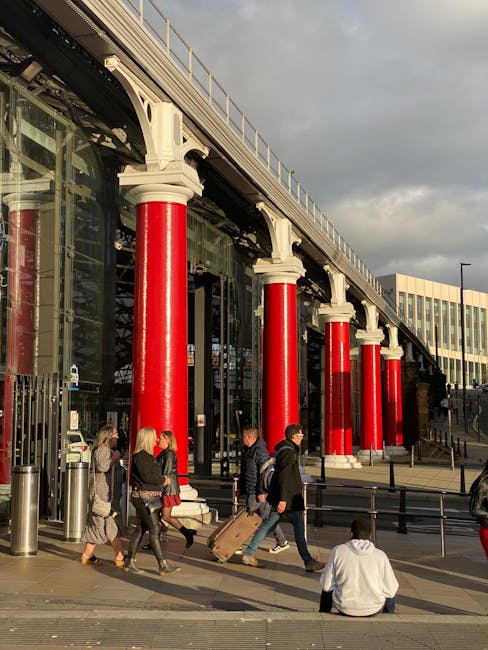
Greenwich Station moves expert removals for tight access
Moving near Greenwich Station can feel straightforward on a map and then, suddenly, awkward in real life. Narrow streets, busy foot traffic, awkward stairwells, limited parking, basement flats, top-floor walk-ups, and those little access surprises that only seem to appear on moving day. That is exactly where Greenwich Station moves expert removals for tight access becomes a practical, reassuring solution rather than just a service label.
If you are trying to move a flat, a family home, or even a few bulky items around the station area, the details matter. The right removals team does more than lift boxes. They plan the route, manage timing, choose the right vehicle, protect shared areas, and keep the whole job calm when the access is anything but. To be fair, the move itself is only half the job; the other half is making sure the building, the neighbours, and your own sanity survive it intact.
This guide explains how tight-access removals work, what to expect, where people get caught out, and how to choose the safest and most efficient option for your move. It also shows when a smaller vehicle, a full house removals team, packing support, or short-term storage may be the smarter call. If you are exploring broader moving options too, you may find local removal services in Greenwich SE10 useful alongside this guide.
Table of Contents
- Why Greenwich Station moves expert removals for tight access Matters
- How Greenwich Station moves expert removals for tight access Works
- Key Benefits and Practical Advantages
- Who This Is For and When It Makes Sense
- Step-by-Step Guidance
- Expert Tips for Better Results
- Common Mistakes to Avoid
- Tools, Resources and Recommendations
- Law, Compliance, Standards, or Best Practice
- Options, Methods, or Comparison Table
- Case Study or Real-World Example
- Practical Checklist
- Conclusion
- Frequently Asked Questions
Why Greenwich Station moves expert removals for tight access Matters
Access is one of those things people often underestimate until the van turns up and reality says hello. Around Greenwich Station, the problem is rarely just distance. It is the combination of limited loading space, people moving in and out of the station area, delivery traffic, older buildings, and properties that were clearly not designed with modern moving day in mind.
Tight access matters because it changes almost every part of a move. A normal removal van may be too large for the street at the wrong time. A sofa may fit through the front door but not the turn in the hallway. A bed frame may need dismantling before it even leaves the bedroom. And if you have ever watched two people trying to angle a wardrobe down a narrow staircase while pretending everything is fine, well, you know the look.
Expert removals for tight access are not about making the move sound dramatic. They are about reducing risk. Risk of damage. Risk of delay. Risk of upsetting neighbours or building managers. Risk of paying more because the first plan was never really workable. In a busy part of Greenwich, the best move is usually the one that has been quietly planned properly from the start.
It also matters because many local homes and flats sit in mixed-use or densely occupied areas where timing and efficiency have a bigger impact. A team familiar with local moving patterns can often spot issues early, from restricted parking to awkward entry points. That kind of judgement saves time and a fair bit of stress.
How Greenwich Station moves expert removals for tight access Works
The process starts before anything gets loaded. A good removals provider will ask about property type, floor level, staircase width, lift access, parking restrictions, loading distance, and any items that are unusually large or fragile. It may sound a bit fussy, but that early detail changes the whole plan.
For many jobs, the team will decide between a compact vehicle, a larger van, or a staged move. A smaller vehicle can be a better fit if the street is constrained or if parking close to the property is difficult. In other cases, a larger van is still fine, provided the loading window, route, and handling plan are sensible. If you are comparing vehicle options, the removal van service in Greenwich SE10 is a useful place to understand the type of vehicle support that works for awkward access.
Loading methods also change. Items may be wrapped, dismantled, carried with extra protection, or moved in a specific order to avoid bottlenecks. For example, heavy items often come out first while a clear path remains. Fragile boxes are loaded so they do not get crushed by bulkier pieces. The little details matter. Always.
For tight-access properties, communication is not optional. The movers may need a quick call on arrival, a check on where to park, or a heads-up if the building entrance is shared with neighbours and visitors. That is normal. A smooth move often looks boring from the outside because all the problem-solving happens quietly in the background.
Sometimes the smartest approach is a mixed one. A man and van service in Greenwich SE10 can be ideal for smaller moves, single-room relocations, or situations where access is tight but the total volume is manageable. For larger homes or more involved jobs, a fuller house removals service in Greenwich SE10 is often the more efficient choice.
Key Benefits and Practical Advantages
There are several reasons people actively seek out expert removals for tight access rather than hoping a standard move will somehow work itself out.
- Less damage risk: Careful handling reduces scuffs on walls, chipped furniture edges, and doorframe knocks.
- Better timing: A crew that understands access limits can work faster and with fewer false starts.
- Less physical strain: Tight stairs and awkward carries are tiring, especially with heavy furniture.
- More predictable costs: Better planning usually means fewer delays and fewer add-on surprises.
- Lower stress: When the route is planned, the move feels less like a puzzle you are solving in real time.
There is also the neighbour factor. In a busy station area, it is not just your move that is happening. People are coming and going, taxis are dropping off, and someone somewhere is carrying groceries up stairs. A careful moving team tends to be quicker, quieter, and less disruptive. That sounds small, but it makes a real difference in shared buildings.
If your move involves decluttering, sorting, or staging items before the actual day, storage can be a useful pressure valve. Short-term solutions from storage in Greenwich SE10 can make a tight-access move feel far more manageable, especially if keys, completion dates, or room access do not line up neatly. And, let's face it, they rarely do.
Another practical benefit is flexibility. Tight-access moves often need a bit of improvisation. A team with the right equipment and local know-how can adjust without turning the whole day into a crisis. That calm adaptability is worth a lot.
Who This Is For and When It Makes Sense
Not every move needs specialist access planning, but plenty do. If any of the following sounds familiar, you are probably in the right territory.
- You live in a flat near Greenwich Station with limited parking or a narrow entrance.
- You are moving from a period property with steep stairs or compact hallways.
- You have bulky furniture that is awkward to turn or carry.
- You are coordinating a move around a strict handover or completion time.
- You need a quicker, lighter-touch move with minimal disruption.
- You want packing, loading, transport, or storage support rather than doing everything yourself.
This approach is especially sensible for renters and homeowners who know access will be the hardest part of the move. It is also useful for landlords, sellers, and people who are between properties. If your timing is split across days, a staged plan often works best, and that may include packing support from packing and boxes services in Greenwich SE10 to keep things organised before moving day.
Truth be told, many people only realise they need tight-access expertise after their first awkward site visit. The good news is that once you know what you are dealing with, the solution is usually straightforward. Not always easy, but straightforward.
Step-by-Step Guidance
Here is a practical way to approach a Greenwich Station move when access is tight.
- Assess the property properly. Measure stairs, doors, lifts, and main furniture pieces. Note parking restrictions and likely walking distance from the van.
- Be clear about volume. A studio move is very different from a three-bedroom flat with assembled furniture and bikes, boxes, and odd-shaped items.
- Share the awkward bits early. Mention basement access, top-floor flats, narrow turns, or fragile shared areas before booking.
- Choose the right vehicle and service level. A compact van, a man and van arrangement, or a full removals team can each be the right answer depending on the job.
- Prepare the items. Empty drawers, secure loose parts, label boxes, and dismantle where needed.
- Plan the moving route. Think through where items will exit, where the van can stop, and how long loading may realistically take.
- Have a fallback plan. If access is temporarily blocked, know whether items can be held, carried in stages, or stored briefly.
A lot of people skip step three because it feels like over-sharing. It is not. It is the whole point. If a wardrobe will not make a tight turn, better to learn that before moving day than during a sweaty half-pivot on the stairs.
When the move involves a lot of furniture, the right setup may include removal support plus packing materials, and sometimes a cleaner division of labour than expected. For some households, a dedicated removal service in Greenwich SE10 makes more sense than piecing together separate help.
Expert Tips for Better Results
Here are the practical habits that tend to make tight-access removals go smoother.
- Measure the obvious and the annoying: Doors matter, yes, but so do hallway corners, bannisters, and stair landings.
- Remove clutter from routes: Shoes, coat racks, bins, bikes, prams, plant pots. They all create tiny delays.
- Protect walls and floors early: A bit of preventative covering can save a lot of regret.
- Use labels that actually help: "Kitchen - breakables" is better than "misc". Much better.
- Disassemble before frustration kicks in: If a bed frame is going to fight you, dismantle it calmly, not at 6:40 a.m. with the van waiting.
- Keep one small essentials bag: Kettle lead, medication, chargers, keys, documents, snacks. You will be grateful later.
One especially useful tip is to plan for the first and last ten minutes of the move. That is where bottlenecks happen. You may have a clean route on paper, but a shared entrance, an awkward parking spot, or a heavy sofa can make those opening and closing steps feel strangely long.
And if you are moving before a sale completes or while you are between homes, keeping a little flexibility can save your day. Short-term storage is not a failure; it is often the sensible middle step. If you are also working through the sale process, these Greenwich home selling tips may help you plan timing more carefully.
Common Mistakes to Avoid
Most moving problems around tight access are not dramatic accidents. They are avoidable assumptions.
- Booking the wrong size vehicle: Too large can mean parking trouble; too small can mean multiple trips and extra handling.
- Underestimating stairs: A third-floor walk-up is never "just a few extra steps" on moving day.
- Not checking loading rules: Even informal parking issues can slow everything down.
- Leaving packing too late: Half-packed boxes are awkward, unstable, and stressful.
- Ignoring furniture dimensions: Measure the item and the route. Both.
- Assuming the team will improvise every obstacle: Good movers can adapt, but they still need the facts.
There is also the classic mistake of treating moving day like a normal day with a van added on top. It is not normal. Doors are off, floors are protected, people are tired, and everyone wants the same few square feet of space at once. That is why preparation matters so much.
For a lighter, local move where volume is manageable, a flexible van and loading plan may be the right fit. If that sounds closer to your situation, the Greenwich SE10 removal van option is worth reviewing alongside your broader plan.
Tools, Resources and Recommendations
You do not need a warehouse of kit to make a tight-access move work. But a few practical tools and resources make life easier.
- Moving blankets and covers: Helpful for protecting furniture and wall contact points.
- Strong boxes and tape: Weak boxes collapse quickly when carried at angles or up stairs.
- Labels and markers: Keep the unpacking logic clear from the start.
- Furniture tools: Screwdrivers, Allen keys, and small bags for fixings save a lot of later frustration.
- Floor protection: Especially useful in flats, older buildings, and damp weather.
One often-overlooked resource is extra time. Seriously. If you build a little breathing room into the schedule, even a small delay becomes manageable instead of chaotic. A move that is slightly over-planned usually feels calm; a move that is slightly under-planned can unravel very quickly.
If you want to reduce the physical load before moving day, packing help can be a sensible investment. It is not just about speed. It is about consistency. Boxes packed the same way are easier to stack, easier to carry, and less likely to split when the stairwell gets narrow. For many households, packing support and moving boxes in Greenwich SE10 gives the whole move a much better shape.
Law, Compliance, Standards, or Best Practice
For most domestic removals, the key compliance issue is not a complex legal framework. It is basic best practice: safe handling, sensible vehicle positioning, respect for neighbours, and care with shared spaces. In London, access and parking can be sensitive, so it is sensible to check local restrictions, building rules, and any instructions from your landlord, managing agent, or freeholder before move day.
Good removals practice also means manual handling should be sensible and safe. Heavy items should be lifted by trained people using the right technique and, where needed, the right equipment. If a route looks unsafe or too tight for a full carry, the better choice is to adjust the plan rather than force it. That sounds obvious, but people do forget it when the clock is ticking.
In apartment blocks and managed properties, quiet hours, lift protection, communal access, and lobby care may all matter. It is smart to give residents and building staff reasonable notice if that is part of the process. You do not need a grand formal memo for everything, just decent communication and a bit of courtesy. It goes a long way.
If your move is tied to a bigger life change such as a sale, a new rental, or a temporary relocation, then practical planning matters even more. For a broader view of living and moving locally, this local Greenwich guide can help you stay grounded in the area while you plan.
Options, Methods, or Comparison Table
Choosing the right removals method depends on volume, access, timing, and how much help you want on the day. Here is a simple comparison.
| Option | Best for | Strengths | Limitations |
|---|---|---|---|
| Man and van | Smaller moves, single rooms, a few bulky items | Flexible, practical, often ideal for tight access | Not always enough capacity for larger homes |
| Removal van | Moderate-sized moves with more furniture | Good balance of capacity and efficiency | Can still be awkward if parking is poor |
| Full house removals | Flats and homes with more items or complexity | More hands, more planning support, faster loading | May be more than needed for very small moves |
| Storage plus staged move | Moves with timing gaps or cluttered properties | Reduces pressure, keeps the schedule flexible | Requires extra planning and coordination |
The right answer is rarely the biggest vehicle or the largest crew. It is the one that fits the access reality. In a tight street near the station, that can make the difference between a clean move and a long, frustrating one.
Case Study or Real-World Example
Here is a realistic example based on the kind of move that comes up again and again around Greenwich Station.
A couple in a second-floor flat needed to move out on the same day they collected keys to a new place. The stairwell was narrow, the entrance opened onto a busy road, and their sofa looked fine until they tried turning it by the landing. At that point, it was clear the move needed more than a standard van and a hopeful attitude.
The practical fix was simple: they pre-dismantled the bed, separated fragile items into clearly marked boxes, and used a smaller vehicle with a loading plan that avoided the busiest time at the curb. A few items went into short-term storage first because the exchange timing was slightly messy. Nothing dramatic. Just sensible sequencing.
The result was calmer than the couple expected. Not effortless, not magical, just controlled. The furniture came out without damage, the stairwell stayed protected, and the handover did not turn into a scramble. That is usually what people want, really. A move that feels handled.
If you are moving as part of a wider property plan, local context helps too. For example, if you are weighing up the neighbourhood or nearby amenities, this Greenwich neighbourhood guide can offer a bit of extra local colour while you plan your move.
Practical Checklist
Use this quick checklist before moving day.
- Confirm floor levels, lift access, and stair width
- Measure oversized furniture and note any awkward turns
- Check parking, loading, and arrival timing
- Tell the removals team about fragile or heavy items early
- Pack clearly labelled boxes by room
- Disassemble furniture that will not fit cleanly in one piece
- Protect floors, walls, and communal areas where needed
- Keep essentials, documents, chargers, and valuables separate
- Have a backup plan for items that cannot move immediately
- Leave a little time buffer. It helps more than people expect
Expert summary: Tight-access moves succeed when access is checked early, the vehicle matches the property, and the packing is calm and deliberate. If one of those pieces is missing, the day becomes harder than it needs to be.
Conclusion
Greenwich Station moves expert removals for tight access is really about reducing friction in one of the trickiest parts of moving: getting belongings safely in and out when the space does not make life easy. Whether you are dealing with a narrow staircase, a busy street, a compact flat, or a property with awkward loading conditions, the best outcomes usually come from planning, honest access checks, and the right type of removals support.
That may mean a smaller vehicle, a fuller removals team, extra packing help, storage for a short gap, or simply a more careful schedule. The exact mix depends on your property and your timing. But the principle stays the same: the move should fit the access, not the other way around.
If you are still comparing options, take a look at competitive removals prices to understand how the right setup can balance value with practicality. And if you want a smoother, more joined-up move, it is worth thinking through the whole journey now rather than reacting on the day.
Get a free quote today and see how much you can save.
Sometimes the smartest move is the one that feels quietly under control from the first box to the last.
Frequently Asked Questions
What does tight-access removals actually mean?
Tight-access removals refer to moves where the property or route is difficult to use because of narrow stairs, limited parking, small doorways, awkward turns, shared entrances, or restricted loading space. Around Greenwich Station, that is very common.
Is a man and van service enough for a flat near Greenwich Station?
Sometimes, yes. If the move is small to medium-sized and the furniture volume is manageable, a man and van service can be a practical choice. If you have larger furniture, multiple rooms, or more complex access, a fuller removals setup may be better.
How do I know whether I need a removal van or a full house removals team?
Think about both volume and access. A removal van may suit a modest move with straightforward loading, while a full house removals team is often better if you have more furniture, stairs, or time pressure.
What should I tell the removals team before the move?
Tell them about floor level, lift access, parking limits, stair widths, large furniture, fragile items, and any restricted entry points. The more accurate the information, the better the plan.
Can removals teams dismantle furniture for tight access?
Many can help with dismantling or advise what needs to be taken apart first. This is especially useful for beds, wardrobes, and bulky shelving that will not turn easily in a narrow route.
What if the van cannot park close to my property?
That is exactly the kind of issue tight-access planning is meant to address. The team may use a smaller vehicle, stage the loading, or plan for a short carry distance. It is better to know this in advance rather than on the curb.
Should I use storage if my move dates do not line up?
Yes, if there is a gap between leaving one property and entering the next, storage can reduce stress and avoid rushed decisions. It is often a sensible temporary fix rather than a last resort.
How far in advance should I arrange a tight-access move?
The sooner the better, especially if your move involves a station-area property, a busy road, or a completion deadline. Early booking leaves room for planning and helps avoid last-minute compromises.
Will packing help make the move easier?
Absolutely. Proper packing makes boxes easier to stack, carry, and load. It also reduces the chance of damage when items need to be moved through narrow spaces or up stairs.
What are the most common mistakes people make with awkward access?
The biggest mistakes are underestimating the route, not measuring furniture, choosing the wrong vehicle, and leaving packing too late. Those four alone can turn a manageable move into a messy one.
Are tight-access moves more expensive?
They can be, depending on the extra time, handling, vehicle choice, or storage involved. But careful planning often keeps costs more controlled than a poorly prepared move that runs long or causes damage.
Can I combine removals with local tips and area advice if I am new to Greenwich?
Yes, and that is often helpful. If you are settling in, local Greenwich advice can make the transition easier, especially when you are still learning the area and its moving-day quirks.