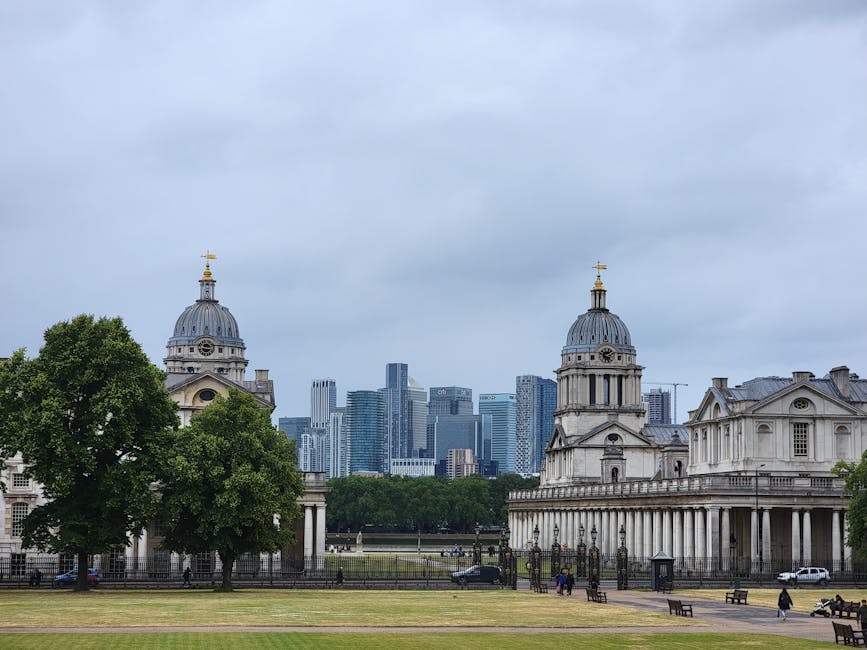
Council parking suspension guide for Greenwich removal vans
If you are planning a move in Greenwich, parking is often the bit that turns a straightforward removal into a mildly stressful puzzle. Streets can be narrow, bays fill quickly, and the last thing you want on moving day is your van circling the block while everyone else is carrying boxes. This Council parking suspension guide for Greenwich removal vans walks you through what a suspension is, why it matters, how the process usually works, and how to avoid the sort of delays that can throw a whole move off schedule.
In practical terms, a parking suspension is a temporary restriction that reserves a section of kerbside space for a specific purpose. For removal vans, it can make the difference between a clean, efficient loading process and a day full of double-parking, rushing, and awkward conversations with neighbours. Let's face it, moving is already enough without adding a parking headache.
This guide is written for household moves, flat relocations, office clearances, and anyone trying to plan removal vehicle access in Greenwich with a bit less chaos and a bit more control.
Table of Contents
- Why this matters
- How it works
- Key benefits and practical advantages
- Who needs this and when it makes sense
- Step-by-step guidance
- Expert tips for better results
- Common mistakes to avoid
- Tools, resources and recommendations
- Law, compliance and best practice
- Options and comparison table
- Case study example
- Practical checklist
- Conclusion
- Frequently asked questions
Why Council parking suspension guide for Greenwich removal vans Matters
Moving vans need space. That sounds obvious, but in Greenwich it is often the whole story. A removal crew may be working with furniture dollies, protection blankets, long items, and people moving in and out of a doorway all at once. If the van is parked too far away, the job gets slower, heavier, and more expensive in both time and effort. If parking is blocked, even for a short stretch, the whole move can feel cramped and disorganised.
A council parking suspension is useful because it creates a controlled loading area. That can reduce the chance of your van being forced to park across the street, in another bay, or nowhere near the property at all. For taller or wider removal vehicles, it can also help avoid awkward positioning in streets where the margin for error is tiny.
There is also a trust element here. When a move starts with clear parking arrangements, the day usually feels calmer. People know where the van is going, the route from front door to vehicle is shorter, and the team can get on with the job without repeated interruptions. Small thing? Maybe. But on moving day, small things become big things very quickly.
It is also worth saying that Greenwich streets vary a lot. Some areas are relatively manageable, while others are tight, busy, or heavily parked by residents and visitors. In those places, assuming you will "just find somewhere" can backfire. That's the honest version.
How Council parking suspension guide for Greenwich removal vans Works
A parking suspension generally works by temporarily removing normal parking availability from a specific bay, stretch of kerb, or permit area so it can be reserved for a named purpose. For removal vans, the aim is usually to secure enough clear space for the vehicle to park close to the property during loading and unloading.
The exact process can vary by council area and street type, but the broad logic is similar: you request the suspension, explain the dates and location, and wait for confirmation before assuming anything is reserved. In many cases, the council will want enough notice to process the request and arrange any signage or enforcement steps. That timing matters. Leave it too late, and you may be forced into a plan B that is less convenient and more expensive.
Here is the practical part people sometimes overlook: a suspension does not magically create unlimited room. It usually applies to a specific space and period. If your van is larger than expected, or if the property has awkward access, you may still need a careful parking plan around corners, bollards, lamp posts, or single-file traffic. So yes, the suspension helps, but it is not a miracle cure. Shame, really.
In some moves, the best approach is to combine the suspension with clear arrival timing, a walkthrough of the access route, and a confirmation that the removal vehicle can actually use the space effectively. That is the difference between "we've got a bay" and "we've got a workable loading point".
Key Benefits and Practical Advantages
The main benefit is simple: better access. But there are several smaller gains that matter just as much.
- Shorter carrying distance: Fewer steps between the property and the van usually means faster loading and less physical strain.
- Less disruption: A planned space reduces the chance of blocking neighbours, buses, cyclists, or through-traffic.
- More predictable timing: Removal crews can work more efficiently when parking is sorted in advance.
- Lower stress on the day: Everyone knows where the van is meant to be, which helps the move feel organised.
- Better handling of bulky items: Sofas, wardrobes, white goods, and bed frames are much easier to move with close vehicle access.
There is another advantage that is easy to miss: a suspension can help protect the property itself. When items do not need to be carried as far, there is often less risk of bumping walls, scuffing communal hallways, or blocking narrow stairwells for too long. For flat moves, especially in older buildings, that can be a real relief.
And if you are moving with children, pets, or elderly family members in the mix, any reduction in chaos is welcome. Truth be told, that alone can be worth the effort.
Who This Is For and When It Makes Sense
This guide is especially relevant if you are:
- moving house in a street with limited kerbside space
- living in a flat or maisonette with restricted frontage
- using a large removal van or multiple vehicles
- moving items from a site with narrow roads or busy parking pressure
- planning an office move or a commercial clearance that needs quick roadside access
- helping a vulnerable person move and want the process to stay as smooth as possible
It makes sense to think about a parking suspension when any of the following are true:
- you cannot reasonably unload from a side street or driveway
- you expect other cars to fill the area early in the morning
- the property sits in a controlled parking zone or permit-heavy street
- the removal team needs direct access for a large van or lorry
- you want to avoid multiple shuttle trips between a distant parking spot and the property
Sometimes people only realise the value of a suspension after they have done one move the hard way. You know the kind: someone has to stand outside guarding a space while the van circles, there is a tense 10-minute pause, and the kettle is still in a box somewhere. Not ideal.
If you are already comparing moving services, it can help to look at other logistical issues at the same time. For broader moving advice, you may also find the guidance on removals services useful when planning the bigger picture.
Step-by-Step Guidance
If you want to avoid guesswork, use a simple planning process. This is the part that saves stress later.
1. Check the access situation first
Look at the property frontage, the width of the street, and how vehicles normally park there. If you can, stand outside at around the time your van would arrive. Morning light and afternoon traffic can make a street feel very different. A bay that looks fine at 9am may be gone by lunchtime.
2. Confirm what kind of vehicle is coming
Not all removal vans are the same size. Some moves need a medium van, others need a larger luton-style vehicle, and some need multiple runs. The vehicle size affects how much space is actually required. If you under-estimate this part, the suspension may not be enough on its own.
3. Build in notice time
Do not leave this until the last minute. Councils usually need advance notice to process parking changes, and even if the move itself is flexible, the parking side often is not. Put the request in early so you are not juggling paperwork the night before moving day.
4. Prepare the location details carefully
Be precise about the road name, nearest landmark, bay type, and which side of the street the vehicle should use. Tiny errors here can lead to the wrong space being flagged, which is annoying in the most unhelpful way.
5. Coordinate the timing with your removals team
The suspension should match the actual loading window. If your crew arrives two hours before or after the reserved period, the advantage drops sharply. Tell everyone the same plan. It sounds obvious, but moving plans have a habit of drifting by just enough to cause trouble.
6. Keep a backup plan
Even with good preparation, things can change. A parked car may not move, traffic may be slower than expected, or the street layout may be tighter than first thought. Have a fallback route, a contact number, and a clear idea of where the van can legally wait if needed.
7. Re-check on the day
Before the van arrives, confirm the space is available and that any required notices or bay markings are in place. If something looks off, deal with it early. A five-minute check can save an hour of frustration.
Quick reality check: the best parking plan is usually the one that was confirmed in advance, not the one improvised beside a half-open front door.
Expert Tips for Better Results
After enough moves, certain patterns become obvious. Here are the practical tips that genuinely help.
- Measure the frontage, not just the street: A wide street does not always mean easy loading. Look at kerbs, corners, and how far the van can sit from the door.
- Think about street furniture: Lamp posts, trees, railings, planters, and signage can all affect how well the suspension space works.
- Plan around peak parking pressure: School runs, commuter times, and weekend visitors can all eat into availability.
- Keep communication simple: One person should be responsible for the parking plan. Too many people making assumptions is how little mistakes spread.
- Check for nearby restrictions: Loading bays, residents' bays, yellow lines, and suspended spaces all behave differently. It is worth checking each one rather than assuming they work the same way.
Another useful habit is to take a few photos of the access point the day before. Nothing fancy. Just enough to remind yourself where the van should stop and whether the space looks clear. It sounds a bit low-tech, but low-tech often wins.
If you are managing several moving tasks at once, keep the parking question separate from the packing question. People mix those up all the time. Packing can be messy; parking needs to be tidy.
Common Mistakes to Avoid
Most problems with council parking suspensions are avoidable. The trouble is they are often the kind of mistakes that only show up on moving day, which is exactly when you do not want surprises.
- Leaving the request too late: This is the classic one. Late notice reduces flexibility and may leave you without the space you need.
- Guessing the vehicle size: A van that is too large for the reserved area can ruin the whole setup.
- Vague location details: "Outside the house" is not always enough. Be specific.
- Forgetting about timing: A suspension that starts after the van arrives is not much use.
- Not checking adjacent restrictions: Nearby bay rules, access routes, or double-yellow lines may still affect the move.
- Assuming neighbours will leave space free: They might, but on a busy street that is a risky bet.
There is also a softer mistake: not telling the removal team about the parking arrangement early enough. If the crew thinks they are working from the kerb but end up half a street away, their plan changes on the fly. And nobody enjoys that kind of surprise at 8 in the morning.
One more thing. Do not treat the suspension as a formality. It is part of the move. Part of the move.
Tools, Resources and Recommendations
You do not need a fancy system to handle this well, but a few simple tools help a lot:
- A phone note or move sheet: Keep the street name, dates, contact details, and access instructions in one place.
- Photos of the road and frontage: Useful when explaining the site layout to the removals team.
- A measuring tape: Helpful if you are unsure whether the van can fit close enough to the property.
- A printed moving schedule: Handy if mobile signal drops or you are under pressure on the day.
- Clear labelling on boxes: This does not affect parking directly, but it reduces time spent carrying items between the property and the van.
If you are arranging a wider move, it can also help to review related services in advance. For example, some households need storage between dates, while others want a fuller removals package that includes packing and loading. You can read more about man and van services if a smaller or more flexible option suits your move better.
Practical recommendation: keep one person responsible for all move-day logistics. One. Not three people texting different updates while the kettle boils and the van is already on its way.
Law, Compliance, Standards, or Best Practice
This area touches local parking control, so it is sensible to treat it carefully. Rules can vary depending on the exact street, bay type, council procedures, and timing. The safest approach is to assume that a parking suspension is only valid once it has been properly arranged and confirmed through the relevant process.
From a best-practice point of view, a few principles always hold true:
- Do not block traffic or emergency access: A suspension is not a licence to park anywhere without thought.
- Follow the stated terms exactly: Time windows, bay boundaries, and vehicle limits matter.
- Keep evidence of confirmation: Save any reference details, instructions, or notices you receive.
- Respect neighbours and other road users: A move is temporary, but the effect on the street is very real for the people living there.
If the move is in a controlled parking area, always be careful about assuming that informal arrangements are enough. Councils generally take parking rules seriously, and that is fair enough. The street still has to function for everybody else.
For anything that feels borderline - a large vehicle, a tight access point, or a street with unusual restrictions - it is smarter to allow extra time and get the details checked than to wing it. Moving day is not the best day for improvisation, really.
Options, Methods, or Comparison Table
There is more than one way to manage parking for a removal van. The right choice depends on the street, the size of the vehicle, and how much time you have to plan.
| Option | Best for | Pros | Limits |
|---|---|---|---|
| Parking suspension | Busy streets, narrow roads, direct loading needs | Creates reserved space close to the property; usually the clearest setup | Needs advance planning and may be subject to council rules |
| Standard nearby parking | Quieter streets or smaller moves | Simple if space is available; no special request needed | Availability is uncertain; can mean longer carrying distances |
| Temporary loading only | Short, efficient collections or unloads | Useful for quick drop-offs where permitted | Not always suitable for longer moves or larger vehicles |
| Alternative access route | Properties with rear access, driveways, or side entrances | Can reduce kerbside pressure entirely | Not available for many Greenwich homes, especially flats |
In many Greenwich moves, the suspension is the strongest option simply because it removes uncertainty. But if you have driveway access or a rear lane that works properly, that can be better. The key is not to assume the same method suits every property. Streets are stubbornly different like that.
Case Study or Real-World Example
Here is a realistic scenario. A family moving from a first-floor flat in Greenwich had a narrow road with resident parking on both sides. The removal team could load from the front, but only if the van could stop close enough to the entrance. Without a reserved space, the driver would likely have had to park farther away and carry items through a tighter route.
They checked the frontage two days before the move and realised that the street filled early with parked vehicles. They arranged the parking plan in advance, coordinated the van arrival with the loading window, and kept one person on hand to confirm the space was clear before the team arrived. The result was not glamorous. No confetti. No dramatic music. But the move ran steadily, with fewer interruptions and less carrying time between the flat and the vehicle.
What mattered most was not the paperwork itself, but the way it removed uncertainty. The team could focus on lifting and stacking properly rather than improvising around parked cars. That is the real win. Calm, efficient, boringly successful - and boring is good on moving day.
Practical Checklist
Use this checklist in the final few days before your move:
- Confirm the exact address and road name
- Check the size of the removal van
- Review access around the property and bay width
- Make sure the parking arrangement is approved or confirmed
- Match the time window to the moving schedule
- Tell the removals team about any restrictions or obstacles
- Prepare a backup plan if the reserved space is unavailable
- Keep photos or notes of the frontage handy
- Re-check the street layout on the morning of the move
- Make sure neighbours are not caught off guard if access will be busy
Small but useful reminder: if you can solve the parking problem before the boxes are out, the rest of the move usually feels much easier.
Conclusion
A good parking plan is one of those quiet details that makes a move feel professional and manageable. With the right preparation, a council parking suspension can reduce stress, improve access, and help your Greenwich removal van get close enough to do the job properly. That means less carrying, less waiting around, and fewer last-minute scrambles.
Most of the hard work comes down to planning early, checking the street properly, and keeping everyone on the same page. It is not glamorous, but it is effective. And honestly, in moving, effective is what you want.
If you are preparing for a move and want a smoother experience from start to finish, sort the parking first, then everything else can follow more easily.
Get a free quote today and see how much you can save.
Frequently Asked Questions
What is a council parking suspension for removal vans?
It is a temporary arrangement that reserves a specific parking space or bay so a removal van can load or unload closer to the property. In practice, it helps reduce carrying distance and avoids the uncertainty of searching for space on a busy street.
Do I need a parking suspension for a Greenwich removal van?
Not always. If you have a driveway, rear access, or a very quiet street with reliable space, you may not need one. But in busier Greenwich roads, or where loading needs to be direct, it is often the safer option.
How far in advance should I arrange it?
As early as possible. The exact notice period can vary depending on the situation, so the sensible move is to allow time for processing rather than leaving it to the last minute.
Can a parking suspension cover any size of van?
Usually only within the limits of the approved space and the local rules that apply. If the vehicle is larger than expected, you may need to check whether the reserved area is actually workable for that size.
What happens if someone parks in the suspended space?
That depends on how the suspension is enforced and what the council has arranged for that location. The important thing is to confirm the suspension properly and keep proof or reference details available on the day.
Is a parking suspension the same as a loading bay?
No, they are different. A suspension temporarily changes the status of an existing parking space, while a loading bay is a space designed for loading activity under its own rules. They can serve similar purposes, but they are not interchangeable.
How do I know whether the van can fit near my property?
Check the width of the street, the position of parked cars, and any physical obstacles such as posts, trees, or railings. If you are unsure, ask the removals team to assess the access in advance. A quick photo can help a lot.
Can I arrange one if I am moving from a flat?
Yes, and flats often benefit most from careful parking planning because access can be tighter and the carrying distance longer. It is especially useful if the building has stairs, shared entrances, or limited frontage.
What if my moving time changes?
If the schedule shifts, the parking plan may need to shift with it. That is why it helps to keep the arrangement and the removals team in close contact. A small timing change can matter more than people expect.
Are there any risks in not arranging parking properly?
Yes. The main risks are delays, extra carrying distance, stress, and the possibility that the van cannot park close enough to the property. In a busy area, that can quickly snowball into a longer and more tiring move.
Can a parking suspension help with office or business moves too?
Absolutely. Any move that depends on fast, direct vehicle access can benefit, especially if equipment, furniture, or archive boxes need to be moved efficiently and without repeated trips.
What is the single best tip for getting this right?
Start early and be specific. Give the exact location, the correct time window, the right vehicle size, and clear instructions about access. That one habit prevents a surprising number of moving-day problems.